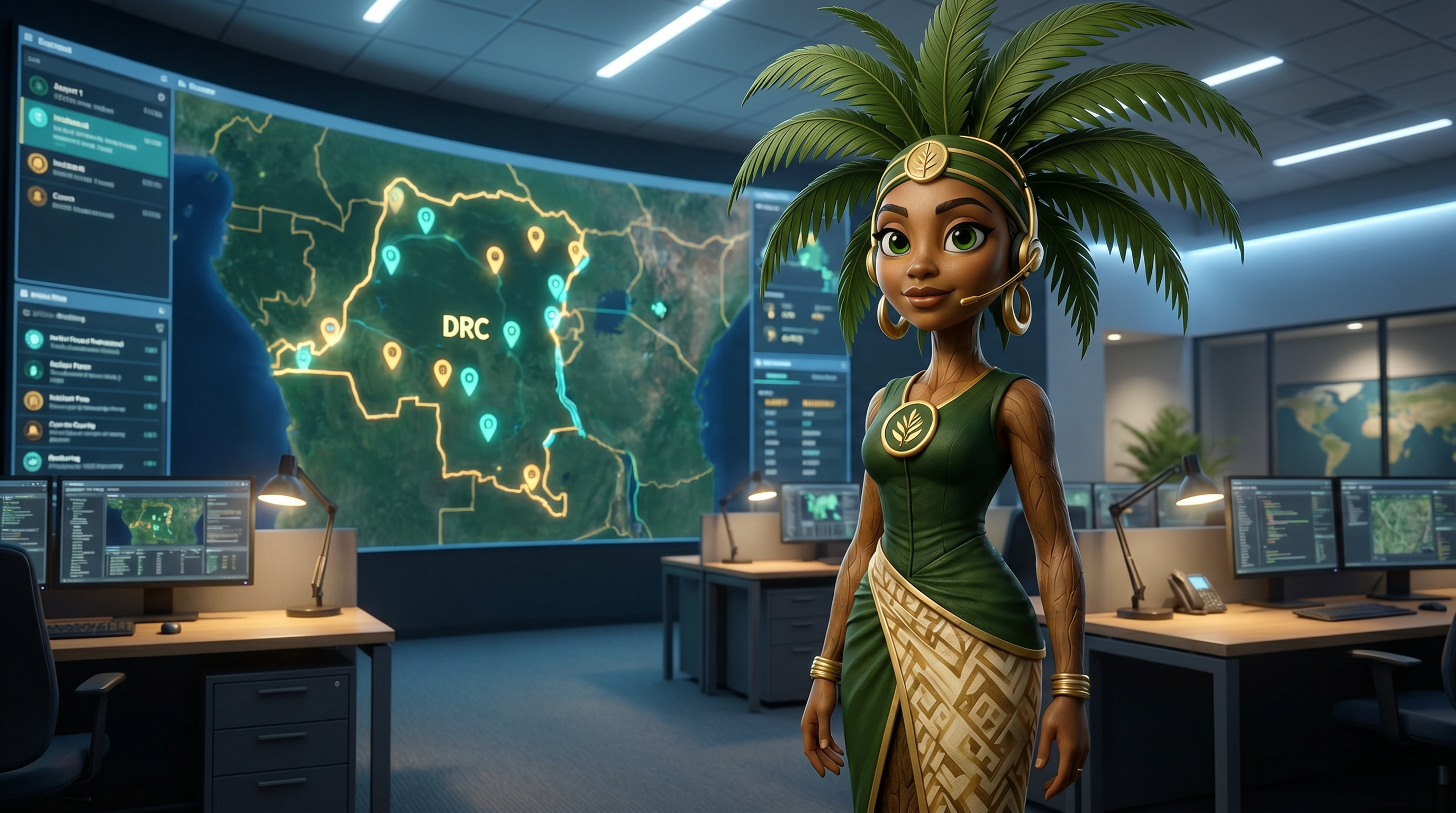
Zola at the call center dispatch wall
Project 03 · Phase 3 Planned

Regional Call Centers

Five to ten regional centers. Every region of the DRC. Six languages. Built on the map that makes precise dispatch possible.

Why the Address Map Comes First

The call center emergency dispatch system is only as good as the address data behind it. When a citizen calls for help, the dispatcher needs a precise, verified location — not a vague description. The National Address Mapping program's 20 million registered addresses are the foundation that makes accurate emergency dispatch possible in the DRC for the first time in history. The call centers are built on the map.

The Mission

Emergency Services That Know Where You Are

In much of the DRC today, calling for emergency help is an exercise in frustration. Without standardized addresses, dispatchers cannot accurately direct police, fire, or medical responders. Response times are measured in hours, not minutes. Lives are lost that could be saved.

Palm Leaf Partners' regional call center network changes this. Each center is equipped with real-time access to the national address registry, enabling dispatchers to pinpoint a caller's location instantly and route the nearest available responder with precision.

5–10
Regional Centers
0
Languages Served
24/7
Operations
20M
Addresses in System
01 The call comes in.

A citizen dials. The system knows exactly where they are.

The moment a call connects, the dispatcher's screen shows the caller's verified address — pulled instantly from the national address registry. No more "near the big tree" or "behind the market." A precise location, a verified address, a QR code that can be shared with the responding unit in seconds. For the first time in DRC history, emergency dispatch has the data it needs to save lives.

Zola at the dispatch center
Zola

"When someone calls for help, the most important thing is knowing where they are. We built the map so that answer is always ready."

Zola · Palm Leaf Partners
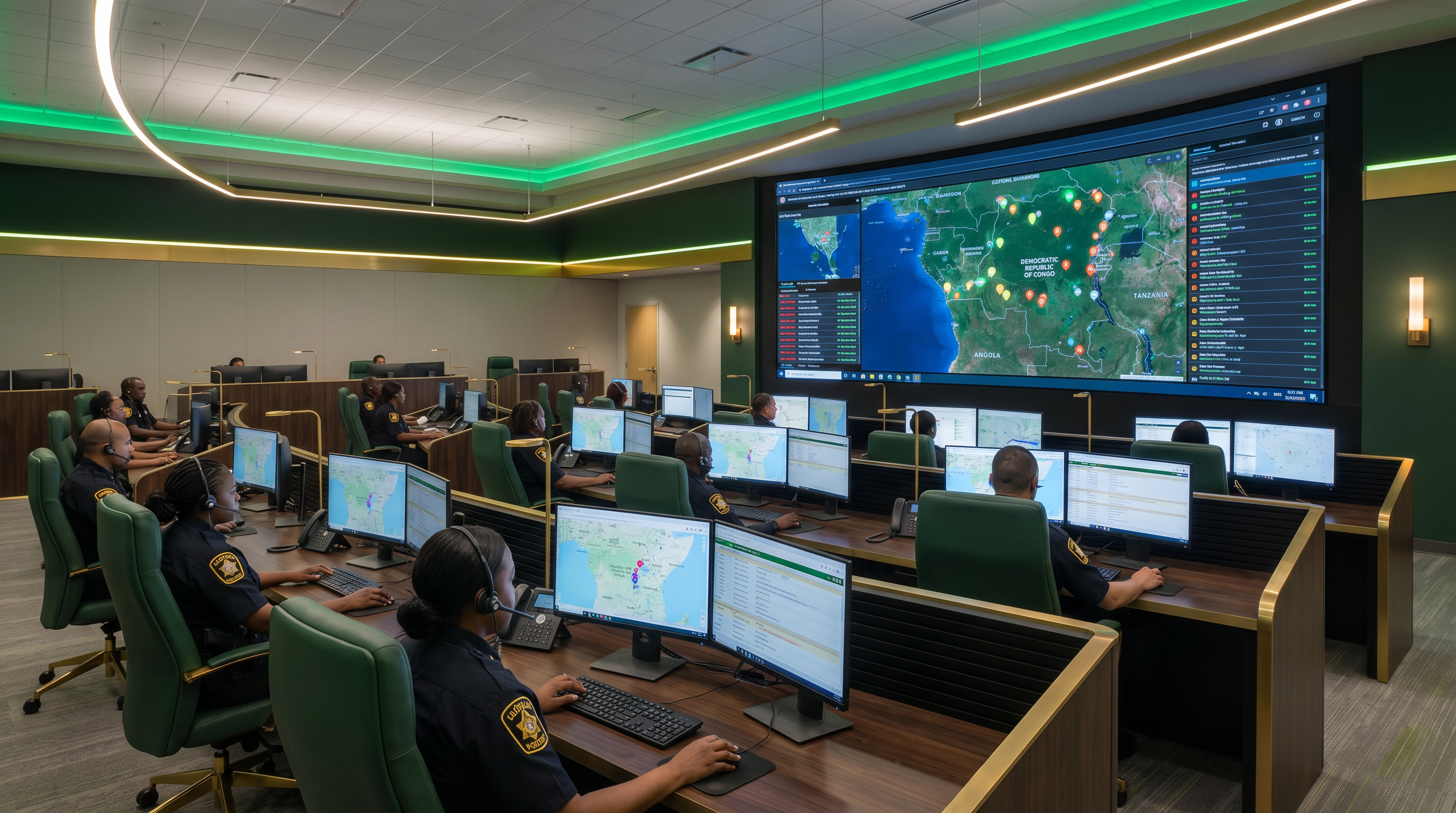

Operations floor with wall map
02 Every region. Every language.

Five to ten centers. Six languages. Every corner of the DRC covered.

Centers are positioned in Kinshasa, Lubumbashi, Goma, Kisangani, and Mbuji-Mayi — with additional sites planned as the program scales. Each center is staffed with agents fluent in French, Lingala, Swahili, Kikongo, Tshiluba, and English. No citizen is turned away because of a language barrier — especially not in an emergency.

A massive curved video wall at each center displays a live map of the DRC with real-time incident pins — giving supervisors full situational awareness across every active call and every active response.

03 Beyond emergency.

Citizen services. Government information. Community connection.

The call centers are not only emergency dispatch facilities. They are citizen service hubs — the first point of contact between the Congolese public and the systems that serve them. Government information, utility reporting, address registration support, and community services are all available through the same network, in the same six languages, around the clock.

Professional team in Kinshasa
Zola

"A call center is not just a room full of headsets. It's the voice of a government that shows up for its people."

Zola · Palm Leaf Partners
Inside the Build — Center Capabilities
  • Emergency dispatch with GPS-precise address lookup
  • Real-time national address registry integration
  • Live incident tracking with wall-map visualization
  • Multi-agency coordination across police, fire, and medical
  • Citizen services in 6 languages, 24/7
  • All call data stored in sovereign Tier-IV Data Center
  • Shift supervisors and quality monitoring at every center
  • Interconnected via national fiber backbone for low latency

Precision Dispatch Starts with the Address Map

The call center system is built on the foundation of 20 million registered addresses. See how the mapping program makes this possible.

See Address Mapping →